
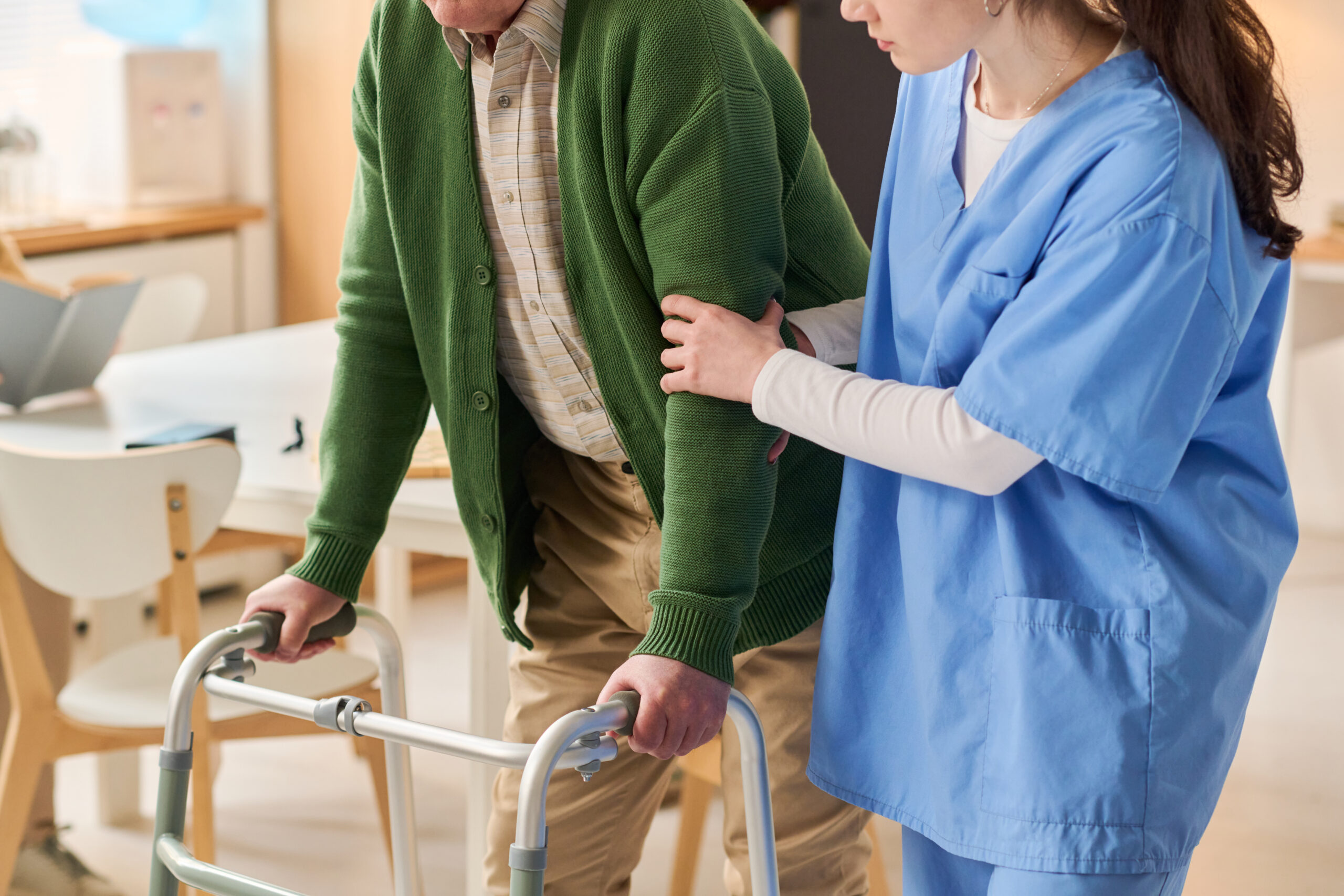
Moving a loved one from a bed, chair, or wheelchair is one of the most physically demanding parts of caregiving. Without proper caregiver training, improper lifting can lead to severe back injuries for you and dangerous falls for your loved one. Therefore, learning how to safely assist an aging adult at home starts with mastering basic patient mobility and transfer techniques.
Step-by-Step Guide to a Safe Pivot Transfer
The pivot transfer is the safest way to move an individual with partial weight-bearing ability from a bed to a chair or wheelchair.
- Prepare the Environment: Place the wheelchair at a 45-degree angle to the bed on the patient’s stronger side. Lock all wheels on both the bed and the chair. Clear away loose rugs or tripping hazards.
- Apply a Gait Belt: Secure a heavy-duty transfer belt snugly around your loved one’s waist. Never pull on a patient’s arms, shoulders, or underarms, as this can cause dislocations or painful muscle tears.
- Position Your Body: Stand directly in front of the patient. Turn your feet outward, place them shoulder-width apart, and bend your knees. Keep your back straight—always lift with your legs, not your lower back.
- The Lean and Lift: Have your loved one place their hands on the bed or your shoulders (never your neck) to push up. On a count of three, brace your knees against theirs. Then, grip the transfer belt firmly from underneath, and straighten your legs to guide them up.
- Pivot, Don’t Twist: Do not twist your spine. Instead, take small steps to pivot your entire body along with the patient until their backside faces the receiving chair.
- Lower Safely: Instruct them to reach back for the armrests of the chair. Slowly bend your knees, keeping your back straight, and lower them gently into the seat.
Preventing Falls During Transfers
Even with great technique, unexpected slips can happen. To minimize risk, ensure your loved one wears non-slip socks or sturdy rubber-soled shoes before attempting any movement.
If they begin to fall during a transfer, do not try to catch them or pull them upright by force. Doing so can severely injure both of you. Instead, widen your stance, pull them close to your body, and slowly guide them down your leg to the floor. Furthermore, protect their head during this process.
Safety First for Lehigh Valley Caregivers
If a transfer ever feels too heavy or unsafe to perform alone, do not risk it. Professional in-home senior care agencies train their staff extensively in advanced patient mobility and transfer techniques. In addition, they utilize mechanical assists when necessary to guarantee absolute safety.
Frequently Asked Questions About Senior Mobility
Q: What is the safest way to transfer a senior with limited mobility?
A: The safest method is the pivot transfer using a heavy-duty gait belt. This technique allows the caregiver to support the senior’s weight using their legs—not their back—while guiding the individual through small, controlled steps. Instead of twisting the spine, controlled steps help ensure safety.
Q: How can a caregiver prevent back injuries during patient handling?
A: Caregivers must practice proper lifting safety by maintaining a wide base of support, keeping their back straight, and bending at the knees. Never pull on a senior’s arms or underarms. Also, always use mechanical assists or ask for secondary help if a transfer feels too heavy.
Q: When should a family switch from manual transfers to mechanical lifts?
A: You should transition to mechanical assistance (like a Hoyer lift or sit-to-stand device) if your loved one becomes completely non-weight-bearing or cannot assist during the lift. In addition, transition if their weight exceeds the caregiver’s physical capability to safely manage alone.
Contact KARES LLC d/b/a Blue Mountain Home Health Care Lehigh Valley today through Lehigh Care at Home to learn more about our rigorous screening and safety training. Additionally, learn about our compliant care standards.